
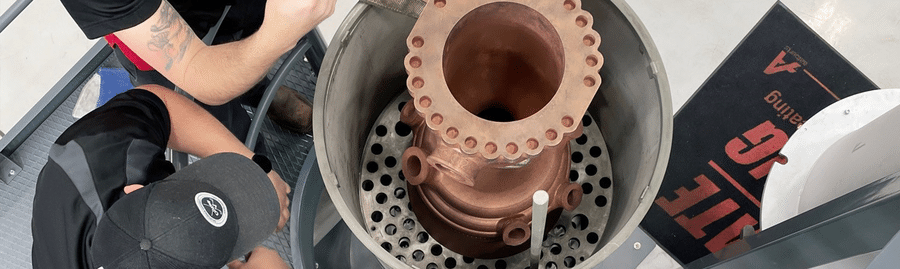
Hot isostatic pressing (HIP) is a process widely used in industries to enhance the properties of materials. It involves applying high temperature and pressure to materials, such as metals and ceramics, to remove internal defects, improve density, and enhance mechanical properties. In recent years, the application of hot isostatic pressing has been expanding within additive manufacturing, creating exciting opportunities for industries ranging from aerospace to medical devices. The combination of HIP and additive manufacturing is a significant development in the world of advanced manufacturing.
Understanding hot isostatic pressing and additive manufacturing
Hot isostatic pressing is a critical process for improving the quality of materials produced through additive manufacturing. Additive manufacturing, or 3D printing, is increasingly popular because it allows for the creation of complex and customized parts with precise geometries. However, one of the challenges with additive manufacturing is the presence of porosity and internal voids within the printed parts. These voids can negatively impact the mechanical properties and overall performance of the material.
HIP addresses this challenge by applying high temperature and pressure in a controlled environment to the parts, causing the material to densify and eliminating internal defects. This results in stronger, more durable parts that are better suited for high-performance applications. When combined with additive manufacturing, HIP significantly improves the overall material properties of printed components.
Why hot isostatic pressing is crucial for additive manufacturing
The integration of HIP with additive manufacturing is gaining traction due to its ability to overcome some of the limitations associated with 3D printing. While additive manufacturing is known for its precision and ability to produce intricate designs, it often leaves behind tiny pores in the final product. These pores can weaken the material and reduce its performance in demanding applications, such as aerospace and medical devices, where reliability and strength are paramount.
Through hot isostatic pressing, these materials undergo a post-processing treatment that eliminates the voids and densifies the parts. This process improves the mechanical properties of the material, including strength, fatigue resistance, and ductility. It also enhances the overall appearance and surface finish of the part, making it more suitable for high-end applications. By incorporating HIP, manufacturers can unlock the full potential of additive manufacturing and produce parts that meet strict quality standards.
Applications of hot isostatic pressing in various industries
The combination of hot isostatic pressing and additive manufacturing has found applications in several key industries. In the aerospace sector, for example, the production of lightweight, high-strength parts is essential for improving fuel efficiency and overall performance. HIP can be used to process aerospace components created through additive manufacturing, ensuring that they meet the rigorous strength and durability requirements needed for flight.
In the medical industry, HIP plays a crucial role in ensuring the quality and reliability of implants and prosthetics. Additive manufacturing allows for the creation of highly customized medical devices, such as hip implants or dental implants. However, these parts need to be dense and free of internal voids to ensure they are safe and reliable. By using HIP, manufacturers can improve the strength and performance of these implants, reducing the risk of failure and enhancing patient outcomes.
Another area where HIP and additive manufacturing are making an impact is in the automotive industry. As the demand for lightweight, high-performance parts increases, the use of 3D printing and HIP is becoming more common in the production of automotive components. HIP is particularly useful in the production of parts such as engine components, which require high strength and resistance to wear.
Future of hot isostatic pressing in additive manufacturing
Looking ahead, the future of hot isostatic pressing in additive manufacturing appears promising. As additive manufacturing continues to evolve, the demand for high-quality, defect-free parts will only increase. HIP will play a key role in ensuring that these parts meet the necessary performance standards.
The use of HIP in additive manufacturing is expected to expand into new industries, and innovations in both processes will lead to further improvements in material properties and overall manufacturing efficiency. Companies like hipping.eu are at the forefront of this technological revolution, offering cutting-edge HIP services to industries that are pushing the boundaries of additive manufacturing.
In conclusion, the integration of hot isostatic pressing with additive manufacturing is a game-changer for industries that rely on advanced materials and precision parts. As this technology continues to mature, it will open up new possibilities for creating high-performance, reliable components across a range of sectors. The future of manufacturing is bright, and HIP will undoubtedly play a crucial role in shaping that future.