
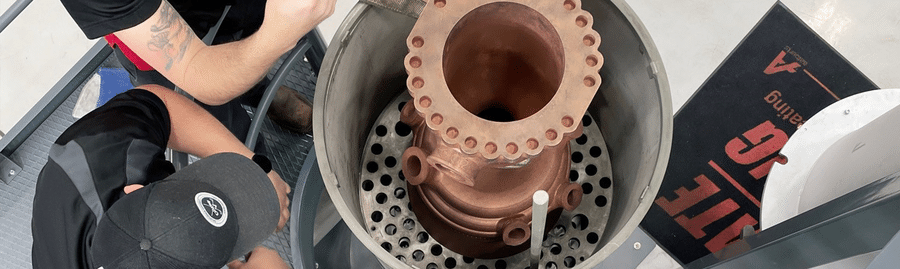
Hot isostatic pressing (HIP) and additive manufacturing are two advanced technologies that have revolutionized the manufacturing industry. Both processes are vital in producing parts that meet high-performance standards, and when combined, they offer immense advantages. HIP is a process that involves applying high pressure and temperature simultaneously to materials, often to improve their mechanical properties, while additive manufacturing (AM) refers to a method of creating objects layer by layer from a digital model. Together, these two technologies form a powerful combination for industries such as aerospace, automotive, and medical.
Understanding hot isostatic pressing
Hot isostatic pressing is used primarily for the densification of materials and the removal of internal porosity. During the HIP process, metal parts or powders are subjected to high temperatures and isostatic pressure, resulting in improved material properties such as strength, ductility, and fatigue resistance. HIP is particularly beneficial in the production of complex shapes that are difficult or impossible to achieve using conventional manufacturing methods.
One of the most significant advantages of HIP is its ability to enhance the mechanical properties of materials that are traditionally known to have lower structural integrity, such as titanium, aluminum, and certain superalloys. The process also plays a crucial role in optimizing the microstructure of the material, making it more homogeneous and enhancing its overall performance. These properties make it a go-to method for industries where material strength and reliability are paramount.
Additive manufacturing and its impact on production
Additive manufacturing, on the other hand, has brought about a paradigm shift in how components are designed and produced. By building objects layer by layer, AM enables manufacturers to create highly complex geometries that would otherwise be impossible or prohibitively expensive with traditional manufacturing techniques. This flexibility in design is particularly useful in industries such as aerospace, where reducing weight while maintaining strength is a constant challenge.
Additive manufacturing also offers the advantage of reducing material waste, as only the necessary material is used to build the part, unlike traditional subtractive manufacturing methods, which often result in significant waste. In addition, AM can shorten production cycles, making it a highly efficient process for producing small batches or customized parts. This efficiency, combined with the ability to create intricate designs, has made AM increasingly popular in various sectors.
Combining hot isostatic pressing with additive manufacturing
The combination of hot isostatic pressing and additive manufacturing offers several unique benefits. Additive manufacturing allows for the creation of complex and customized parts, while HIP ensures that these parts meet the highest mechanical standards. After an additive manufacturing process, parts may still contain internal porosity that can affect their strength and reliability. By applying the HIP process after the part has been created, manufacturers can eliminate this porosity, ensuring that the final product is as strong and durable as possible.
Moreover, the combination of these two technologies allows manufacturers to optimize the performance of materials and reduce the cost of production. Since AM can produce parts with intricate designs at a lower cost, and HIP can improve their mechanical properties, the combination leads to a more efficient and cost-effective manufacturing process. This makes it an ideal solution for industries like aerospace, where high-performance parts are crucial.
For businesses looking to adopt these technologies, companies like hipping.eu are at the forefront of the industry. hipping.eu offers specialized services that combine HIP with additive manufacturing, providing clients with high-quality, reliable parts that meet the most demanding industry standards. Their expertise in both fields ensures that they can deliver products that not only meet technical specifications but also enhance overall performance.
The future of manufacturing with HIP and AM
The future of manufacturing lies in the continued development and integration of advanced technologies like hot isostatic pressing and additive manufacturing. As industries demand higher performance, lower costs, and greater design flexibility, the adoption of these technologies is expected to increase. The ability to create complex, high-performance parts more efficiently will undoubtedly open new doors for innovation across various industries.
By combining HIP with additive manufacturing, manufacturers can continue to push the boundaries of what is possible in terms of design and material performance. As the technologies evolve and become more accessible, they will play a significant role in shaping the future of manufacturing. For companies that want to stay competitive and provide the highest quality products, adopting these innovative technologies is not just an option – it’s a necessity. Visit hipping.eu to learn more about how these technologies can benefit your business.